Animals enter Richmond chimneys through an open flue or a broken cap, and the fix has two parts: remove what is inside, then close the top so nothing returns. A chimney swift or European starling will drop a nest of…
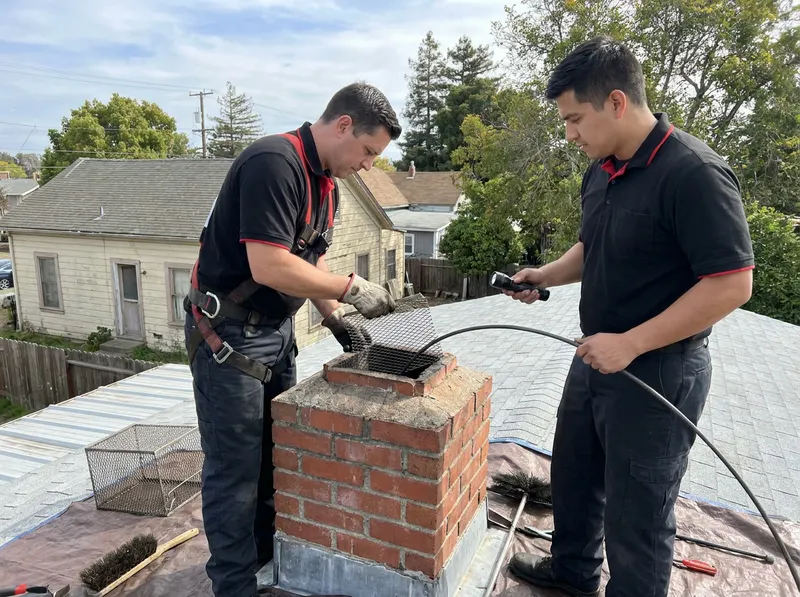
Animals enter Richmond chimneys through an open flue or a broken cap, and the fix has two parts: remove what is inside, then close the top so nothing returns. A chimney swift or European starling will drop a nest of twigs onto the smoke shelf; a raccoon will den on the smoke shelf itself and drag in leaves. Removal starts with a Level 1 inspection (the CSIA-defined visual check of readily accessible parts) to confirm what animal is present and whether it is alive, before anyone opens the damper. Live raccoons and protected nesting birds are timed with their natural exit rather than trapped in the flue, which is both the humane and the legal route in Contra Costa County.
After the animal and any nest are out, the flue is cleaned out, dropped twigs, feathers, and shifted creosote are swept from the smoke shelf and firebox so the chimney draws again and no fine fuel remains near the fire. If the inspection shows glazing or heavy buildup, that reads as a separate cleaning and is quoted openly, not slipped into the removal ticket. Point Richmond and Richmond Heights homes with tall exterior brick stacks tend to attract more nesting because the flue tops sit above the roofline in the open; Marina Bay and Richmond Annex homes often need the cap because coastal fog and the Bay winds off Point Isabel keep flues damp, which draws denning animals.
The permanent barrier is a spark arrestor cap. The one that lasts is custom, ideally 316 stainless mesh animal spark screen with openings between 3/8 inch and 3/4 inch, small enough to block embers and squirrels, large enough not to clog with soot. NFPA 211 calls for a spark arrestor on solid-fuel chimneys, and 316 stainless resists the salt-laden air common near the Richmond shoreline better than aluminum or galvanized, which corrode within a few winters here. A cap sized to the actual flue is the reliable way to keep raccoons out; a loose universal cap can be pried off. If the crown is cracked, a masonry repair may be needed before a cap seats properly, an edge case flagged during the inspection, not assumed.
Decision-fit: if a bird is stuck low in the flue and calling, a same-visit removal fits and the cap can follow once the flue is confirmed clear. If a raccoon has been denning for weeks with young, the removal is timed to the animals leaving, so the cap goes on after, closing it early would trap them inside. A one-time removal without a cap solves today; the mesh guard is what stops the next animal, so most Hilltop and Coronado homeowners pair them on one trip. A free on-site estimate confirms flue size and crown condition before any cap is ordered.
Every job gets a firm, written price after a free on-site visit.
Tell us about your animal removal & spark arrestor job in Richmond and we'll send a clear, written quote, usually the same day.
 Sootking Chimney Sweep