A home chimney water leak in Richmond usually starts at one of five points: a cracked concrete crown, failed flashing where the chimney meets the roof, a missing or rusted rain cap, deteriorated mortar joints, or the…
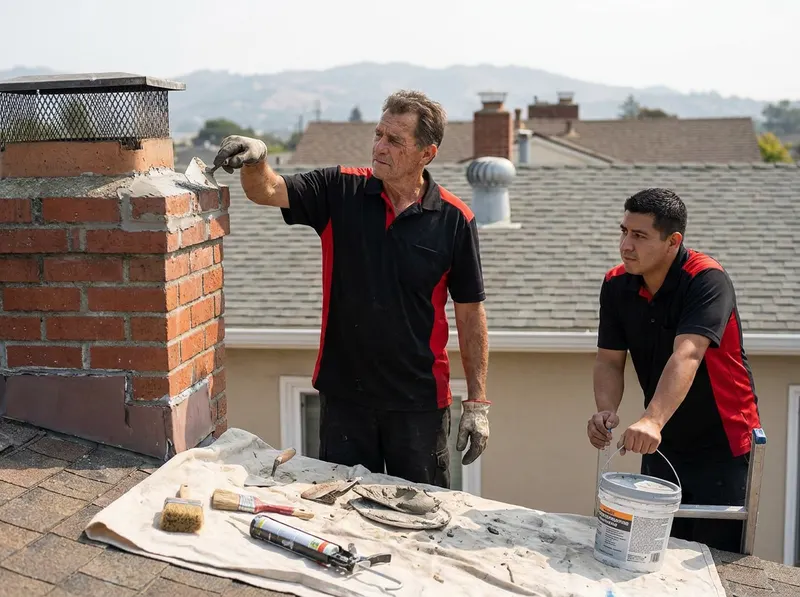
A home chimney water leak in Richmond usually starts at one of five points: a cracked concrete crown, failed flashing where the chimney meets the roof, a missing or rusted rain cap, deteriorated mortar joints, or the brick itself soaking up rain. Brick and mortar are porous, a masonry chimney can absorb water like a sponge, and around Point Richmond and Coronado the salt-laden air off the bay accelerates that erosion. Locating the true source matters because water often travels several feet along framing before it stains a ceiling, so the wet spot inside is rarely directly below the entry point.
Flashing failures cause the majority of leaking chimney repair calls. Flashing is the metal that seals the joint between the chimney and the roof deck; when the sealant dries out or the metal lifts, water runs straight down the chimney chase. In older Iron Triangle and Atchison Village homes with original roofing, re-sealing or replacing flashing is often the fix. A cracked crown, the concrete slab on top of the chimney, is the next most common source; hairline cracks widen through Richmond's wet-winter, dry-summer cycle and let water into the brick below.
Waterproofing is a separate step from repair and serves a different purpose. Chimney waterproofing means applying a vapor-permeable water-repellent sealant to the exterior masonry, the Chimney Safety Institute of America (CSIA) recommends a breathable formula so trapped moisture can still escape rather than freeze and spall the brick. A film-forming paint or non-breathable sealer traps water inside and makes damage worse, which is why the product type matters. Waterproofing protects sound masonry from future absorption; it does not fix an active leak, so cracked crowns, bad flashing, and open mortar joints are repaired first, then the surface is sealed.
Deciding between a quick repair and full waterproofing depends on the chimney's condition. If a single failed flashing or cracked crown is the only entry point, a targeted chimney leak repair resolves it, waterproofing the brick would not have prevented that leak. If the brick face is visibly damp after rain, showing white efflorescence or flaking on chimneys in Marina Bay or Richmond Annex, then the masonry itself is absorbing water and a water-repellent application is the fitting step. Homes with both problems get the repair first and the sealant second, in that order, because sealing over a crack locks moisture inside.
Every leak visit begins with a Level 1 or Level 2 inspection under NFPA 211 standards, which covers the readily accessible portions of the chimney and its structure. A Level 2 inspection is used when a leak has caused interior water damage or when the flue and surrounding areas need closer review. A free on-site estimate documents the source and the recommended fix before any work is scheduled. Call (341) 250-3873 to make an appointment; a photo of the chimney texted in advance can speed the initial read.
Every job gets a firm, written price after a free on-site visit.
Tell us about your chimney leak repair & waterproofing job in Richmond and we'll send a clear, written quote, usually the same day.
 Sootking Chimney Sweep