A flue is the vertical passage inside the chimney that carries smoke and combustion gases out of the house. Three problems bring Richmond homeowners to flue work: a clogged flue that backs smoke into the room, a…
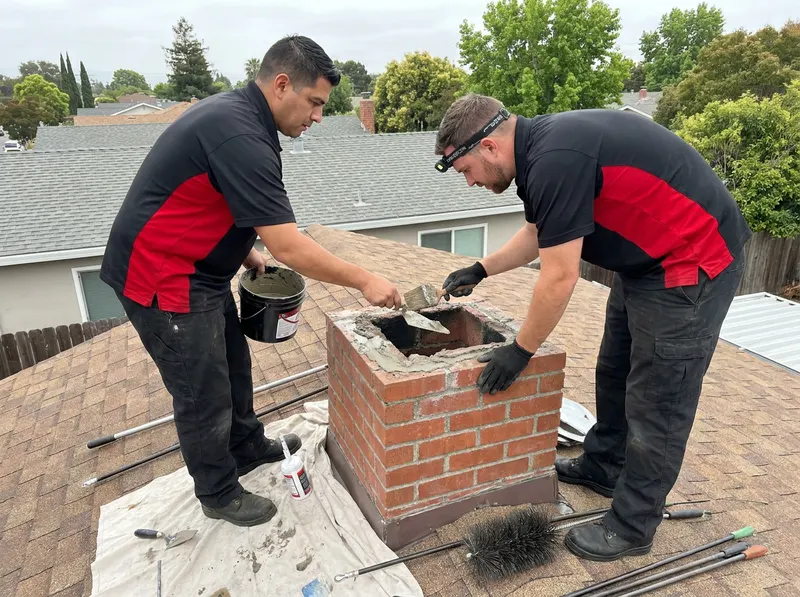
A flue is the vertical passage inside the chimney that carries smoke and combustion gases out of the house. Three problems bring Richmond homeowners to flue work: a clogged flue that backs smoke into the room, a cracked or spalling flue liner, and an old flue the owner wants to seal off for good. The first step for all three is an inspection graded against NFPA 211, a Level 1 for a fireplace used normally, a Level 2 when a home sells, a fuel changes, or a camera pass through the flue is needed. The camera shows whether the clay tile liner is intact or whether creosote, a fallen bird nest, or a masonry crack is the real cause.
Clogged flue repair splits by cause. If the blockage is soot and third-degree creosote, clearing it is a flue cleaning with rotary tools, and the flue returns to service the same day. If the camera finds a broken clay tile or a gap where the liner meets the smoke chamber, the fix is chimney relining: a continuous stainless-steel liner, commonly 5.5 to 8 inches in diameter, dropped down the full run and sealed top and bottom. Stainless liners carry manufacturer warranties often up to a lifetime for the original owner and meet CSIA guidance for wood, gas, and oil appliances. A one-story Point Richmond bungalow with a short 15-foot chase costs far less to reline than a three-story Richmond Heights home with a 28-foot flue, height drives the price because liner is billed by the vertical foot.
Sealing off a flue is a different job from repairing one. Homeowners in Marina Bay and Richmond Annex who switched to a gas insert or a heat pump often want an unused masonry flue sealed so it stops pulling conditioned air, dropping rain, and letting in the raccoons and starlings common near Miller/Knox Regional Shoreline and Point Isabel. A permanent seal-off means a sealed top-mount cap or a metal plate at the smokeshelf, not a rag stuffed in the throat, a stuffed damper still leaks and can trap moisture against the masonry. The trade-off is finality: a sealed flue cannot be used for a fire until it is reopened and re-inspected, so a flue that might carry a future stove should be capped and dampered rather than permanently sealed. For Iron Triangle and Atchison Village row houses with shared party-wall chimneys, sealing one flue does not affect the neighbor's separate flue in the same stack.
The coastal fog and salt air off San Francisco Bay accelerate corrosion on bare metal and rust-stain older Coronado and Panhandle Annex chimneys, which is why stainless rather than aluminum liner is specified for masonry fireplaces here. A free on-site estimate confirms flue diameter, liner condition, and the exact scope before any work is scheduled.
Every job gets a firm, written price after a free on-site visit.
Tell us about your flue repair & sealing job in Richmond and we'll send a clear, written quote, usually the same day.
 Sootking Chimney Sweep